


Pointe-Noire smells of wet cocoa leaves before you see the sign. The Maison du Cacao is a 32-year-old ecomuseum built inside a reconstituted old quarry, not industrial chocolate, but the story of a crop Guadeloupe almost forgot when cane and banana subsidies pulled farmers away in the 1960s. Travel Differently recorded Bernadette and the team in December 2025; this guide covers the Cacadou, the Toto-bois woodpecker, mucilage that tastes like soursop, and Claudie’s tablet workshop.
Quick answer: ~90-minute visit in two parts at Pointe-Noire. Basse-Terre; Tuesday–Sunday; tablet workshop mornings with Claudie; rain backup when the volcano closes; pair with west-coast beach or Cousteau Reserve another day.
Slot into our 10-day itinerary (Day 5 west-coast option) and activities menu. Lodging comparison: where to stay.
Why “ecomuseum”, quarry and terroir
Bernadette explains the label: you start from existing terroir, not a theme-park replica. The visit walks a former quarry replanted with cacaoyers and companion plants, valorising a culture that fed the island economy until economic pressure favoured sugar cane. The house has evolved over three decades into chocolate craft and education while still buying cabosses from private growers and young people who know wild trees, a deliberate mission to keep cacao from disappearing.
Visit format (~90 minutes, two parts)
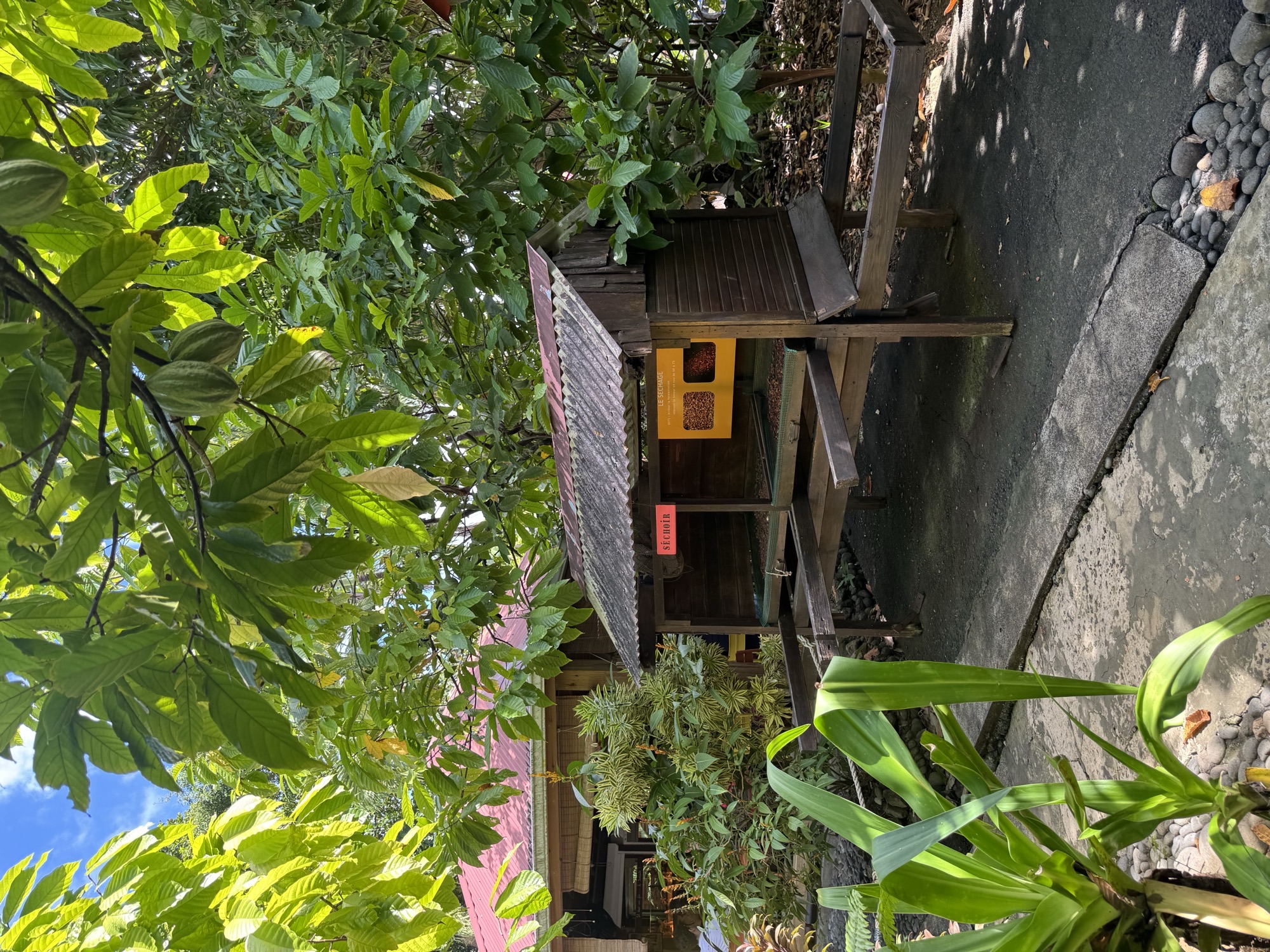
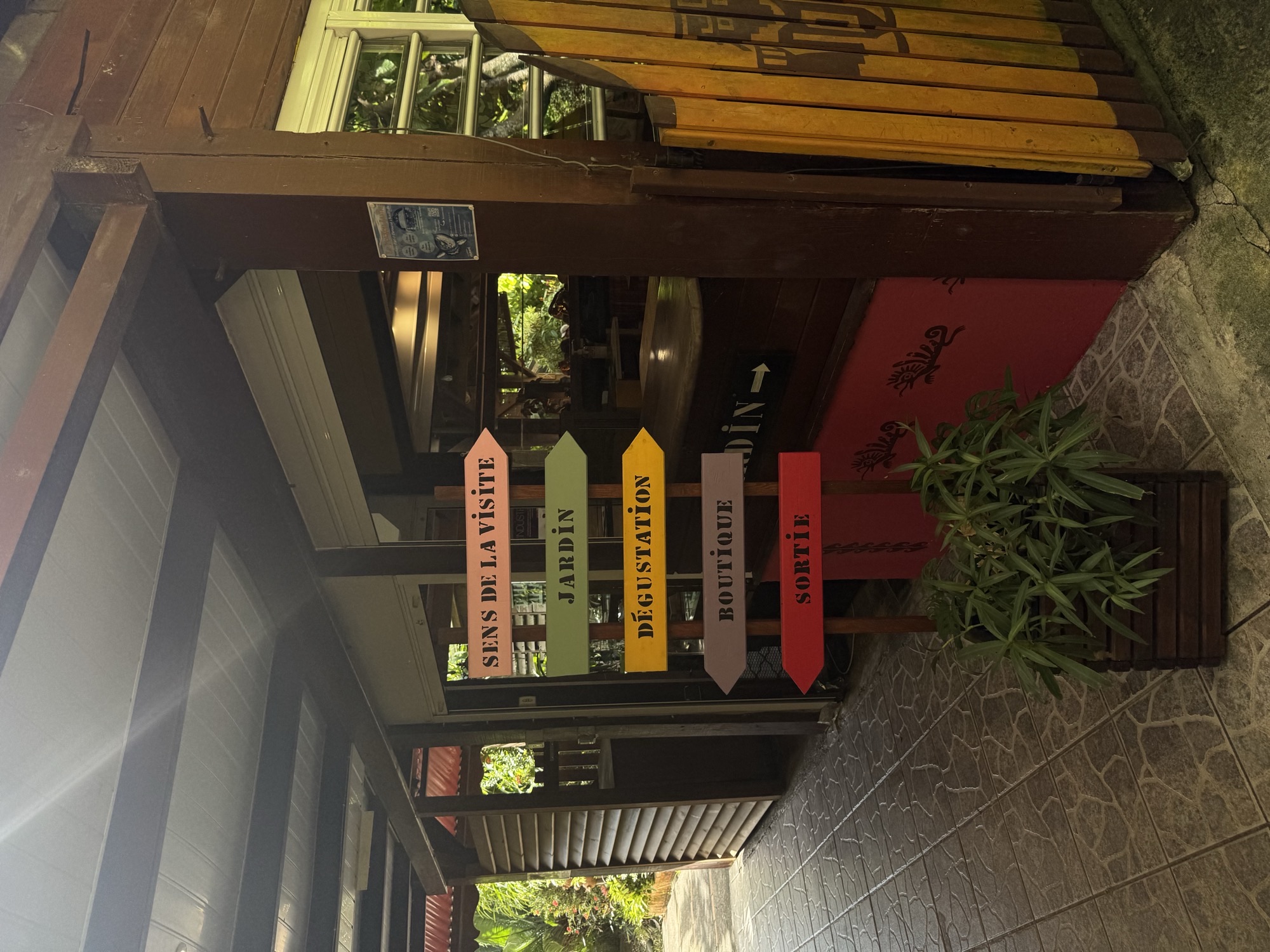
Part one: plantation immersion, cabosses green, orange and black; fermentation boxes at ~50°C under banana leaves for 4–6 days of natural alcoholic fermentation. Part two: tasting and shop. Allow a full morning if you add Claudie’s workshop.
Fermentation and mucilage
Guides crack open fresh pods: the mucilage (pulp around beans) is tangy, reminiscent of soursop / corossol, a sensory hook before any bar exists. Fermentation transforms bitterness; drying and roasting follow in the narrative, even if industrial volume comes from blended beans elsewhere on the island.
The Cacadou, island recipe before factories
Before chocolate factories, locals ate Cacadou: raw cocoa butter mixed with cane sugar, no conching, no emulsifiers. Still sold here; tastes closer to forest floor than a Paris bar. Ask for a taste early. It reframes “Guadeloupe chocolate” away from airport tins.
Toto-bois: the woodpecker that opens pods
Look for holes in green cabosses: the endemic Toto-bois woodpecker pecks them open. Guides use it as a living sign that cacao is ripening, memorable detail for kids and photographers.
Forastero. Criollo. Trinitario
Three genetic families explained on site, Criollo the rarest and least bitter; Forastero the bulk workhorse; Trinitario the hybrid most islands grow today. Island production alone cannot supply all their chocolate; assembly with imported beans is transparent on guided visits.
Tablet workshop with Claudie
Tuesday–Sunday mornings: make your own bar from fruit to mould, dark 75% with cane sugar only. Book ahead in peak season; couples and families with patience love the sticky hands moment.
From ecomuseum to chocolate craft
Bernadette explains how the house evolved over 32 years: from pure ecomuseum to a chocolate workshop branch because island cacao volume alone cannot supply every bar. They assemble with imported beans while still buying wild cabosses from locals and teenagers who know forest trees. The mission is keeping cacao on the island, not pretending every bean is local. For wider Latin American context, see our guide to the best chocolates in Latin America.
Our December 2025 visit with Bernadette
Travel Differently recorded Bernadette on site (transcription archived). She walked us through the reconstituted quarry, fermentation boxes steaming under banana leaves, mucilage tasting like corossol, and the Toto-bois holes in green pods. Claudie’s tablet session ran the same week, allow a full morning if you book both guided visit and workshop.
Rain backup on Basse-Terre
Under cover but immersive, better than a cancelled volcano day. Pair with west-coast beach if sun returns. Also on Marie-Galante itineraries if you ferry over, see Guadeloupe vs Marie-Galante.
Quick answers
Duration? ~1h30 guided; + workshop time. Language? French primary; some English on busy days. Ask when booking. With kids? Yes. Toto-bois story lands well from age 6+. Car? Essential; combine with Pointe-Noire coast or Malendure, rental guide.
Country hub: Guadeloupe.


.avif)
.avif)
%2520copie.avif)





Log in ou Sign up to join the discussion.
Join the discussion
0 comments